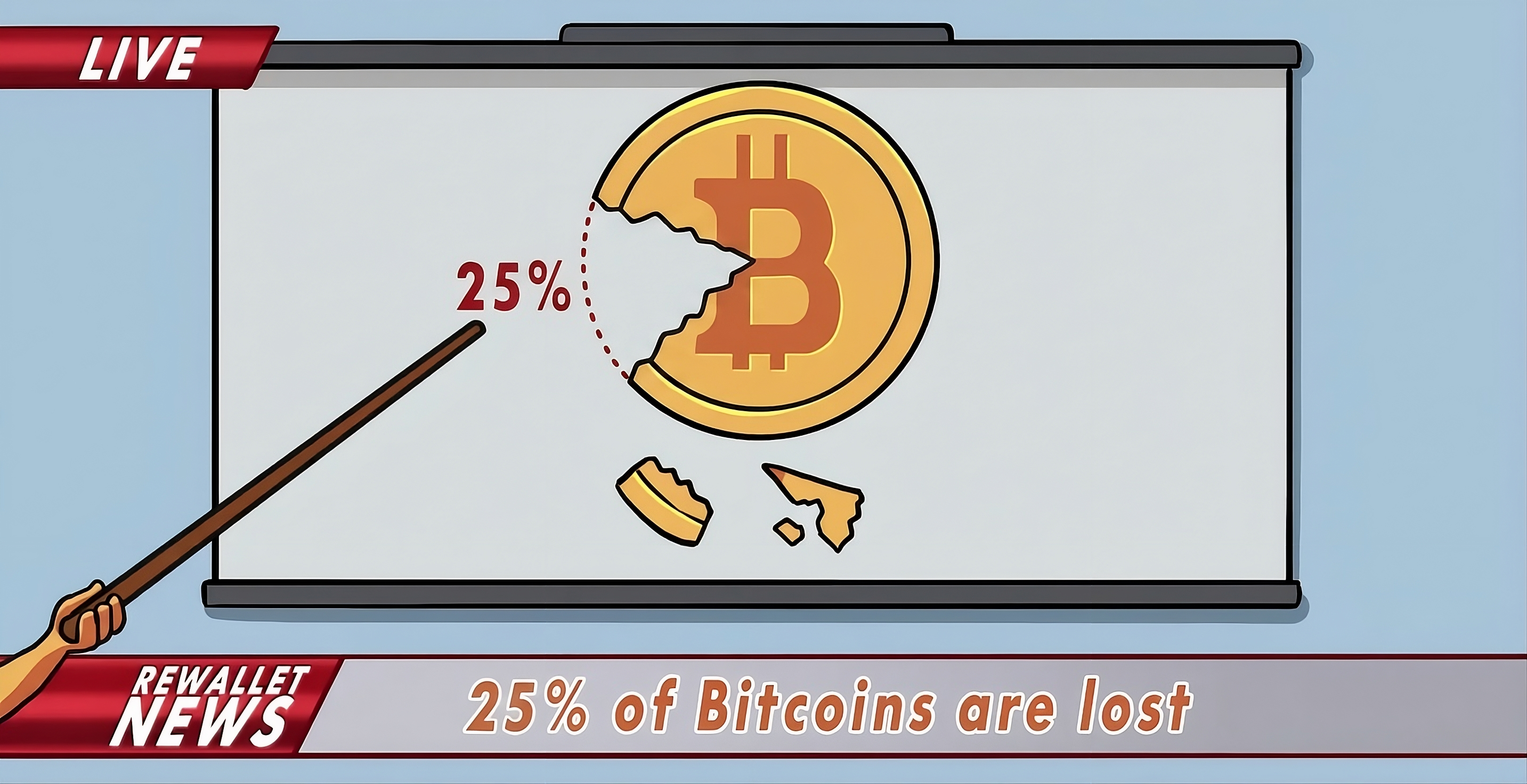

If there’s one thing all humans excel at, it’s making mistakes. There’s simply no way any of us can get through this life without messing up multiple times. While we can’t choose the areas where we’ll slip up, we could probably all agree we don’t want many of these “surprises” to rear their ugly heads in our finances. When it comes to Bitcoin and other cryptocurrencies, however, there are a lot of common and costly ways people lose their digital assets.
Over the past half-decade, ReWallet has helped clients recover access to their crypto wallets in all kinds of situations. Along the way, we've also noticed the same mistakes pop up again and again. The good news is that many wallet access issues are resolvable with the right expertise. However, there are certain mistakes that make recovery much more challenging. Knowing what these common pitfalls are well in advance puts you in a far better position to protect your crypto.
To help you stay safe with your crypto, we’re going to share the most common mistakes we’ve run across in our years of working on crypto wallet recovery. Avoiding these 15 crypto-related issues can save you from a potential nightmare.
The Basics
These preliminary warnings aren’t so much "mistakes" as they are faulty expectations that get newcomers into a lot of trouble. In our experience, if you get these foundational facts straight from the start you'll avoid a large number of problems later on.
1. Not Understanding Self-Custody
You might have heard the phrase, “Not your keys, not your coins,” mentioned in discussions about securing your crypto. There’s a reason why this sentence has stuck around for so long in the crypto space: It’s 100% true. When you take control of a self-custodial wallet’s keys, there’s no authority like a bank or customer support that can help you if something goes wrong.
Many people don’t fully appreciate the weight of responsibility they take on when they decide to self-custody their crypto. That’s not to say ReWallet can’t help in situations where you can’t get into a self-custodial crypto wallet. However, there are many cases that can’t be fixed and they all stem from the fact that people didn’t understand this basic point and plan accordingly with a solid backup strategy.
Think about it this way: You wouldn't buy a physical safe, fill it with valuables and then just toss the key away, right? With cryptocurrencies, that's exactly what people do when they don’t fully understand self-custody and don’t save crucial data like their seed phrase and the wallet file. If you’re going to self-custody your Crypto, then you have to feel comfortable truly owning it.
To avoid this mistake: Spend time understanding how your crypto wallet works before putting your funds into it. A few hours of research now can help you prevent a permanent loss later.
2. Thinking Transactions are Reversible
A harsh lesson some people learn after sending Bitcoin is that crypto transactions don’t work like moving cash on an online banking app. When you send crypto on the blockchain, it’s irreversible, so you can’t afford to mess up. For instance, if you send Bitcoin to a valid Bitcoin address that belongs to someone else, the transaction will get processed exactly as instructed. There’s no bank or central authority that can cancel or reverse the transfer once it’s confirmed. So, unless the recipient voluntarily returns the crypto, you’ve likely lost your Bitcoin.
There are some cases where ReWallet has been able to restore crypto if you sent it to the wrong network, but we can’t make guarantees. If your crypto ends up on someone else's address by accident, however, recovery is usually impossible.
To avoid this mistake: Always double-check the address and correct blockchain network before hitting “send.” If you're moving a large amount, or you’re not super confident about transferring crypto, then send a small “test transaction” first to make sure everything’s OK.
The Seed Phrase
Your seed phrase is the master key to your wallet, so any mistakes handling it put you in an extremely vulnerable position. On the flip side, if you keep your seed phrase safe, you have a great defense against losing your digital assets.
3. Not Keeping a Proper Seed Phrase Backup
By “proper,” we don’t just mean that you’ve taken the time to make sure you wrote down every word you saw when you set up your crypto wallet. The words in your seed phrase have to be in the exact order you see them and with the correct spelling to work for crypto wallet recovery.
So, whenever you set up a crypto wallet, be sure you have the time you need to double-check that every word you write down has the right spelling and that they match the order on the screen. It’s quite common for people to have a backup for their seed phrase, yet the words aren’t in the right order, or they have a few missing words.
To avoid this mistake: Write down a complete, carefully-checked seed phrase on a piece of paper or a steel sheet and store it somewhere secure where only you have access.
4. “Enhancing” Your Seed Phrase with More Security
A lot of crypto owners think they’re being clever by adding deliberate mistakes or omissions to their seed phrase backup. It’s true that this “strategy” can prevent a thief from getting into a crypto wallet if they manage to steal your recovery sheet. However, most of the time, we’ve seen this method backfire on the very people it was supposed to protect. While ReWallet has reconstructed such "enhanced security" seeds and recovery may generally be possible, we wouldn't want you to rely on it.
There’s a good chance you’ll forget what words you changed or left out in your seed phrase if you don’t have at least one copy of your complete, error-free seed phrase. At minimum, you need some instructions that give you a clue if you’re going to use this safety tactic.
To avoid this mistake: We’d recommend simply leaving your seed phrase exactly as your wallet generated it. If you absolutely feel like you need to change your recorded seed phrase for security, then you at least need another document that tells you what’s wrong with this seed phrase, plus hints to jog your memory with the correct response.
5. Not Testing Your Seed Phrase Backup
Writing your seed phrase correctly isn’t enough. You need to know if the recovery phrase you wrote actually works in a real-world scenario.
Many people don't find out they’ve copied a word incorrectly until years later when they already have a lot of crypto and desperately need the backup to work. And, trust us, that’s not a moment where you want to test whether or not this phrase works!
Ideally, you would have already used your seed phrase to restore your wallet so you can feel secure that your backup works as expected.
To avoid this mistake: Do a practice recovery after creating your wallet and before storing significant crypto funds. You should also check that your backup is still legible once or twice a year if it’s on a medium like paper.
The Wallet Password and Optional Passphrase
Although seed phrases are arguably the most significant data point for your wallet, that doesn’t mean you can ignore basic password safety. In some cases, like wallets with optional passphrases, this information can be the difference between successful recovery and a permanently inaccessible wallet.
6. Thinking You Will Remember the Password
At ReWallet, we have come across two recurring patterns among people who lose access to their passwords. The first group often goes back to the early days of Bitcoin, when a wallet might have been set up almost as an afterthought and the coins inside were worth very little at the time. With so little at stake back then, there was little reason to carefully record a password and years later, now that those same coins may be worth a fortune, the password is long forgotten.
The second group is almost the opposite. These are people so concerned about their wallet being compromised that they create passwords which are extremely complex and often deliberately refuse to write them down so there is nothing for a thief to find. They also tend to deviate from their usual password habits and go-to phrases for the same reason, which makes the password far harder to reconstruct later, whether from memory or in a recovery attempt. Without any written backup, this more security-conscious group is left relying entirely on recollection.
In both cases, the lesson is the same: Don’t trust your brain! The pressures of life will take up more and more mental space as the years roll on. Then, when you really need to recall that password to get into your crypto wallet, you’ll probably only have a faint or mistaken recollection.
Do your future self a favor and carefully write your password down and keep it in a safe place. Also, be wary of going too overboard with randomness as we’ve seen many cases when this backfires.
If you need tips about how to choose and store your password, check out the tips in ReWallet’s guide “Secure Passwords and Backups.”
To avoid this mistake: The safest solution is to keep a secure backup with your crypto wallet’s password. If you’re committed to keeping this password in your memory, then it has to be something you feel 1,000% confident you’ll always remember, even many years later. To keep the password fresh in your mind, log in to your wallet a few times every year to test yourself.
7. Using Random Passwords with No Proper Password Manager or Backup
Generating random passwords is a legitimate way to strengthen them, but it also means you have to be super careful about recording them. Another downside of using password managers is that you’re introducing another essential layer that could derail crypto wallet recovery if you don’t have access. ReWallet has recovered wallets with randomly generated passwords, but it is disproportionately difficult and the chances of success are exceptionally low. It is possible, but far from a reliable way to regain access.
To avoid this mistake: If you rely on a password manager to generate and store wallet passwords, make sure you have a secure backup (either physical or digital) so you can access the password even if the manager isn’t working.
8. Using an Optional Passphrase
Let’s be clear: Simply using an optional passphrase (aka the "13/25th word") for your wallet isn't a mistake. Actually, adding this phrase gives you a meaningful security boost by creating a separate wallet that’s inaccessible with the seed phrase alone. This can protect your crypto even if someone forces you to reveal your seed phrase since you have plausible deniability and they won’t get into the hidden wallet.
The problem is that optional passphrases are so unforgiving. Unlike a typical password, entering the wrong passphrase doesn't produce an error or tell you that you've made a mistake. Instead, the wallet simply derives a different private key and opens an empty wallet.
Without that immediate feedback, we’ve noticed a pattern with people who reach out to us. First, they assume their funds have disappeared. Then they begin trying different passphrases and quickly lose track of which one is correct. What starts as a simple typo or moment of uncertainty can easily snowball into multiple stress-inducing recovery attempts.
To avoid this mistake: Only use an optional passphrase if you understand exactly how it works and genuinely need the extra security. If you’re not going to write a backup of your optional passphrase, then you need to choose something that only you know, and that you’re 100% certain you’ll remember for the rest of your life.
The Wallet File
Some wallets rely on a critical file stored on your computer or another device that contains all the info required to access your Bitcoin. If you use one of these wallets, then protecting that file is on the same level of importance as protecting a seed phrase.
9. Storing Your Wallet File “Somewhere”
Wallet files may not seem as serious as seed phrases or passwords, but that’s exactly the attitude that gets a lot of people into trouble. The truth is that wallet files contain the private keys and are critical for recovery efforts, particularly for older wallets that don’t offer seed phrases like Bitcoin Core and MultiBit Classic. In these cases, if that file disappears and you don't have another copy, your crypto will disappear with it.
To avoid this mistake: Treat your wallet file just like a seed phrase. Make multiple backups and don't rely on a single USB drive or hard disk to store it.
10. Throwing Away Or Overwriting Storage Mediums
James Howells could have been living the good life as a Bitcoin millionaire. Instead, this weeping Welshman is known in crypto circles as a cautionary tale for anyone thinking about throwing out or rewriting their hard drives. Back in 2013, Howells accidentally tossed a hard drive with the private key for 8,000 Bitcoin into the trash. Despite multiple efforts to work with his local government and search the landfill, Howells resigned to the fact that he probably lost his Bitcoin fortune.
Every Bitcoin holder should take heed of Howells’s horrific mistake. Be extra cautious with all of your storage devices.
To avoid this mistake: Before reformatting or discarding any storage device, check and see what's on it. If a drive starts failing, stop using it immediately and make a backup before it gets worse.
Hardware Wallets
Hardware wallets are supposed to make self-custody safer, not necessarily “simpler.” Be sure you know the most common ways people accidentally wipe out all of their crypto on these devices before you start using one.
11. Factory Resetting the Device
A factory reset doesn’t delete cryptocurrency. Your crypto is still safe and sound on the blockchain, so you can restore it at any time — provided you have the correct recovery information.
Unfortunately, we’ve found that many people discover their wallet backup isn’t actually usable after a factory reset. They enter their recovery seed phrase only to realize it is not working as expected. By then, however, the original wallet was already erased from the device, so a correct recovery backup is the only way back in.
Note that many hardware wallets can trigger a factory reset automatically as a security measure. For example, Ledger devices reset themselves after three incorrect PIN attempts. While this protects against brute-force attacks, it also means you'll need your recovery information to regain access if you make more than three mistakes logging in.
To avoid this mistake: Never reset your hardware wallet or continue guessing your PIN unless you're confident your recovery seed phrase information is accurate. A factory reset is one of the most common events that exposes backup problems, so it’s best to test your recovery details well in advance.
12. Firmware Updates with No Backup
It’s not necessarily firmware updates that are the problem here. Actually, these updates are generally safe and an important part of maintaining your hardware wallet. It’s just that in some cases a firmware update could reset your wallet in the process.
Like a factory reset, a lot of people who reach out to ReWallet first realize their backup won’t work after a firmware update forces them to try it. They expect to restore their wallet, but they find out that something is either wrong or missing in their records.
To avoid this mistake: Before installing any firmware update, check that you have your recovery seed and any additional recovery information (e.g., an optional passphrase) and that you're 100% sure the backup is correct.
Third Parties
Even though Bitcoin was built to remove intermediaries, you’ll probably use a third-party service like a crypto exchange at some point. Knowing who to trust makes all the difference between getting the service you want from these companies versus creating a much bigger problem.
13. Falling For a Crypto Scam
There are many sophisticated crypto scammers around the world who continue to steal funds from innocent victims. According to Chainalysis’s findings, at least $17 billion in crypto was lost in 2025 alone due to these scams or fraud schemes. Whether it's phishing or pig-butchering, fraudsters are actively trying to get their hands on people’s Bitcoin.
Once you voluntarily send crypto to a scammer, it’s almost never recoverable. In these scam-related cases, ReWallet cannot recover any funds, and anyone claiming they can “retrieve” stolen crypto for an upfront fee is being dishonest. If you’re the victim of crypto fraud, your only legitimate option is to report the crime to local law enforcement and any relevant exchanges.
To avoid this mistake: Be skeptical about any messages that seem overly sensational or “too good to be true” (e.g., promising guaranteed profits from a crypto investment). You should never share any wallet information if you receive unsolicited messages from individuals or companies. Also, reputable non-custodial wallet providers will never ask you to send them payments for storing your funds.
14. Trusting the Wrong Recovery Service
Losing access to a crypto wallet doesn’t have to be the end of your story. ReWallet has helped many clients over the years who initially weren't sure if a wallet recovery was still possible. The catch is that you may only get one chance to do this properly.
By the time many people seek outside help, they've likely exhausted their own recovery options, which can put them in a vulnerable position. In these situations, a professional recovery attempt might represent the last realistic opportunity to regain access, so it’s extremely important to proceed carefully and avoid unnecessary mistakes.
Sadly, this is also the point where many people become targets of fraudulent "wallet recovery" services. After losing access to their wallet, victims are more likely to put their faith in one of these scam companies that says they can help them out, but in reality just want to make off with their money.
Picking the wrong recovery provider can cost you your last realistic chance of recovering your wallet, so you need to take plenty of time to verify a company's reputation and understand its process. Also, you should always be skeptical of a recovery service that has upfront fees or promotes "guaranteed" recovery.
To avoid this mistake: Carefully research any recovery service you're thinking about partnering with for positive signs like a long track record and a transparent team with proven technical expertise. If a wallet recovery service guarantees success before they've even looked at your case or demands any payment upfront, run away!
15. Believing Your Wallet Provider will always be there
Bitcoin is still a baby versus traditional finance, but it has been around for over a decade. Within that time, we’ve seen many wallet providers that were once very popular slowly disappear with little or no warning. Jaxx Liberty and Ether.li are two examples of crypto wallets that are now discontinued projects. The Ethereum wallet Ether.li is a particularly difficult case for former users because it had a unique backup system that used multi-signature security. If your wallet relies on a custom backup system like this, you need to know what your options are if that company shuts down or stops maintaining the software.
To avoid this mistake: Before choosing a wallet, establish how you would recover your crypto if the developers disappeared tomorrow. For example, ask if the seed phrase for your wallet follows a standard like BIP-39 that you could easily use in another wallet. If not, be sure you monitor updates to the wallet you’re using so you can sense if there are any issues and decide whether to move your funds to another storage solution.
Honorable Mention: Crypto Inheritance and Heirs
We get it: Nobody likes to think about death. However, if you hold Bitcoin and ignore proper estate planning today, you’ll only make your crypto inaccessible to the people you most care about.
As more people own Bitcoin, we’re hearing from families struggling to find and recover crypto wallets after a loved one passed away. You can read more about this growing issue and the strategies families use to recover inherited crypto in our previous blog, “Bitcoin Inheritance.”
The TL;DR point is that when there aren’t clear instructions, you’re making it far less likely that beneficiaries will figure out how to get into your crypto wallets and access the funds you want to give them. So, take the necessary time while you’re still alive to document who gets to inherit your Bitcoin and how they can access it.
To avoid this mistake: If you own crypto, create a thorough, easy-to-read inheritance plan that explains where your backups are and how heirs can access your Bitcoin if something happens to you. You can learn the full details on crypto inheritance planning in ReWallet’s Crypto Estate Planning guide.